how to clean thrift store yarn

Thrifting Tips: How to Clean Secondhand Yarn

I love thrifting. Thrifting or buying secondhand is a great way to save money, prevent waste and support local nonprofits. And for those that are a little icked out by thrift stores, then please, instead of tossing your unwanted items in the trash, please, please, please donate them to thrift stores so those of us that aren’t bothered by the ick, can keep the cycle going.

Whenever I need something, I will often look at a thrift store first before buying new. And sometimes I just stop by local thrift stores to see if they have something I didn’t know I needed. 🙂 That’s what I did earlier this week. My husband and I had gone hiking at Project Chimp-if you are ever in north Georgia, check it out! We hiked the very steep white trail and were able to see a couple chimps from the observation deck using binoculars . We also heard them a lot while hiking. It was neat and I hope to one day manage to get tickets to one of their public events to see the chimps up close. After hiking we had lunch at a fantastic Cuban style restaurant in Blairsville, GA called Nani’s. Check them out if you are ever in the area-no website but Google it. The fried plantains and the Chicky plate are fantastic and consistently delicious. After lunch we went to a nearby thrift store that supports the local Humane Society. This place is huge. I was lucky enough to find a set of double pointed knitting needles and a skein of yarn for 50 cents each. Whenever I buy something at a thrift store, the first thing I do when I get home is clean it, aka remove the ick. The yarn didn’t appear dirty but had a slight smell like it had been in storage and therefore needed to be cleaned before using. So how do you clean a skein of yarn? Easy!

yarn and knitting needles purchased at a thrift store

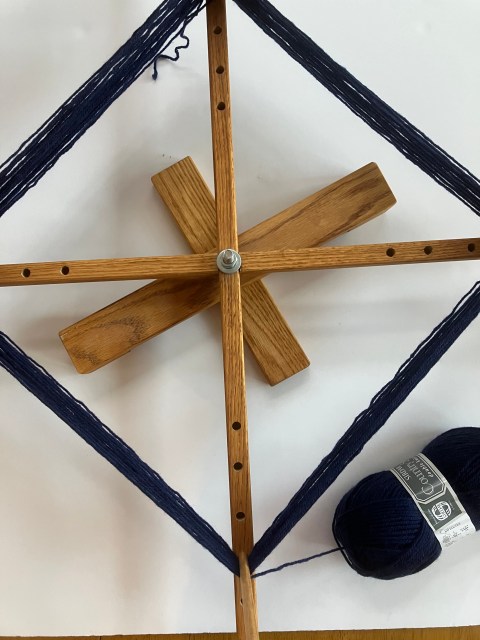
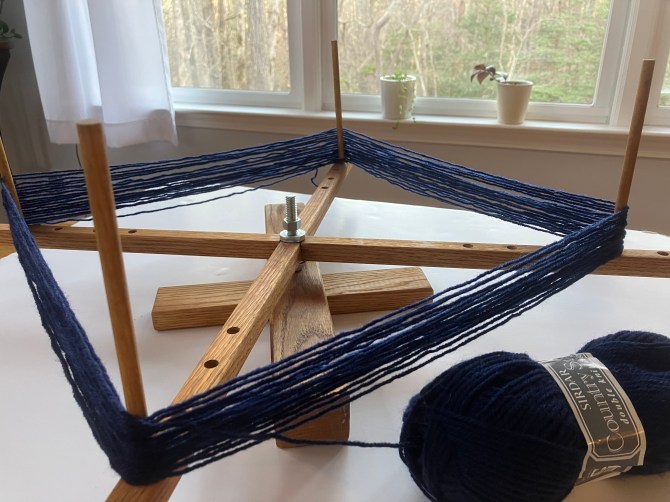
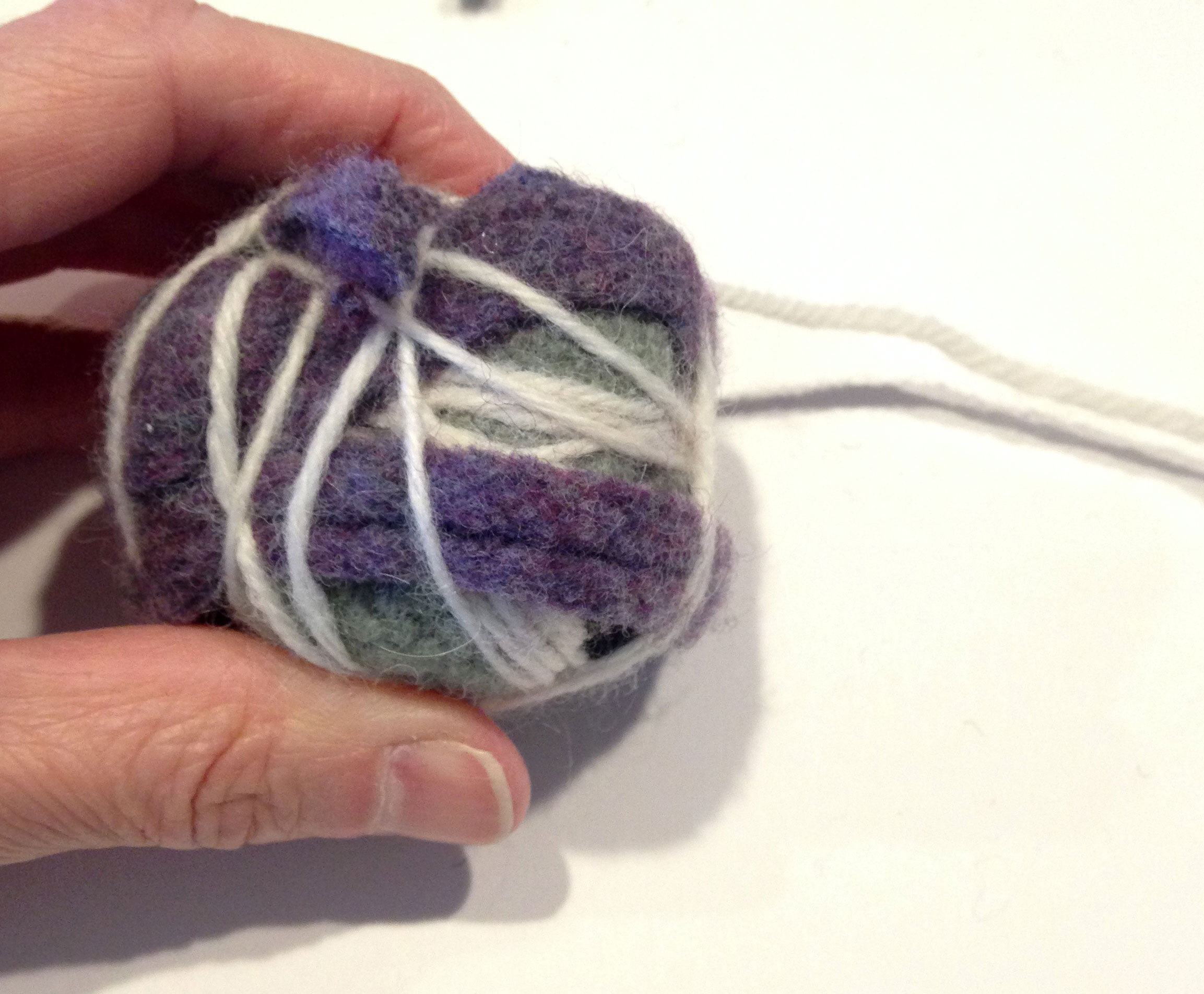
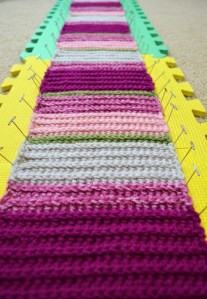
First, wind the yarn into a hank or a loose circle. I use my yarn swift but you can do this manually by winding the yarn onto the back of a chair or something else that will create a large circle of yarn. See photo below.

Next, tie the circle of yarn four or five times evenly spaced out around the circle. Make sure you tie up both ends of the yarn. The purpose of this is to keep the yarn together so make sure you knot the ties well.

how to clean thrift store yarn

Now wash the yarn! Check your yarn label for washing instructions. My yarn label stated machine wash and dry so I placed my circle of yarn into a mesh delicates laundry bag and washed and dried it along with some towels. I did remove the yarn from the dryer before the end of the cycle as I knew the towels would take a lot longer to dry than the yarn.

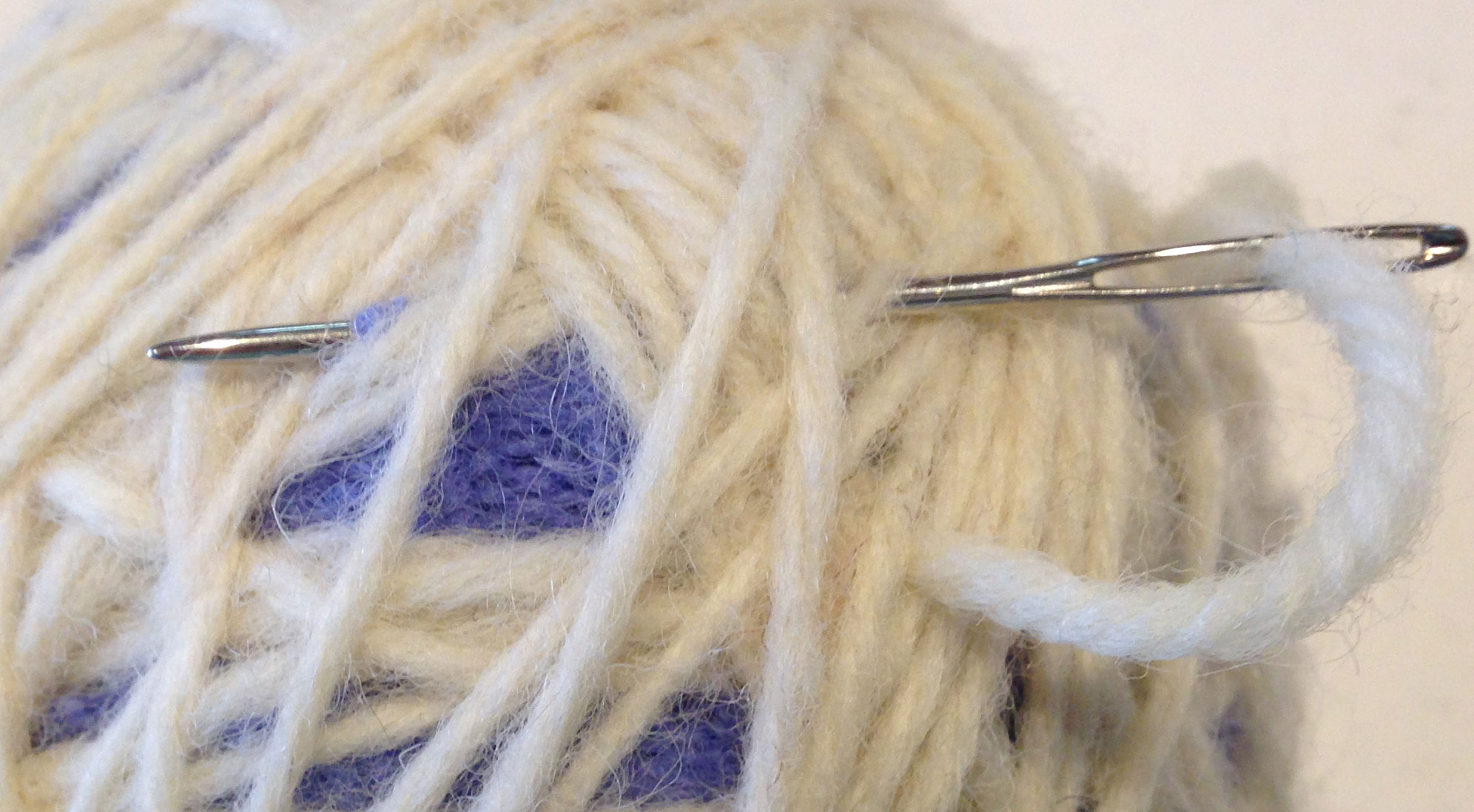
Once the yarn was fully dry, I placed it back on the yarn swift and wound it into a ball. Now the yarn smells fresh and is ready to use! It’s that easy.

Happy Crafting!
Darleen

Shells of Love baby blanket crochet pattern by Darleen Hopkins
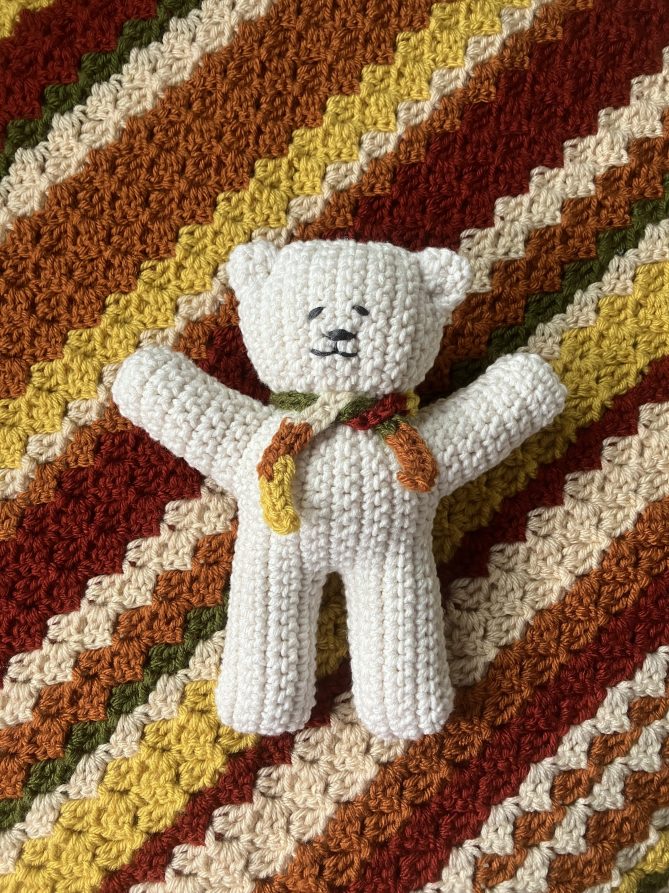
Crochet by Darleen Hopkins corner by corner baby blanket and bear for charity donation

Creative Baby Blanket Using Scrap Yarn

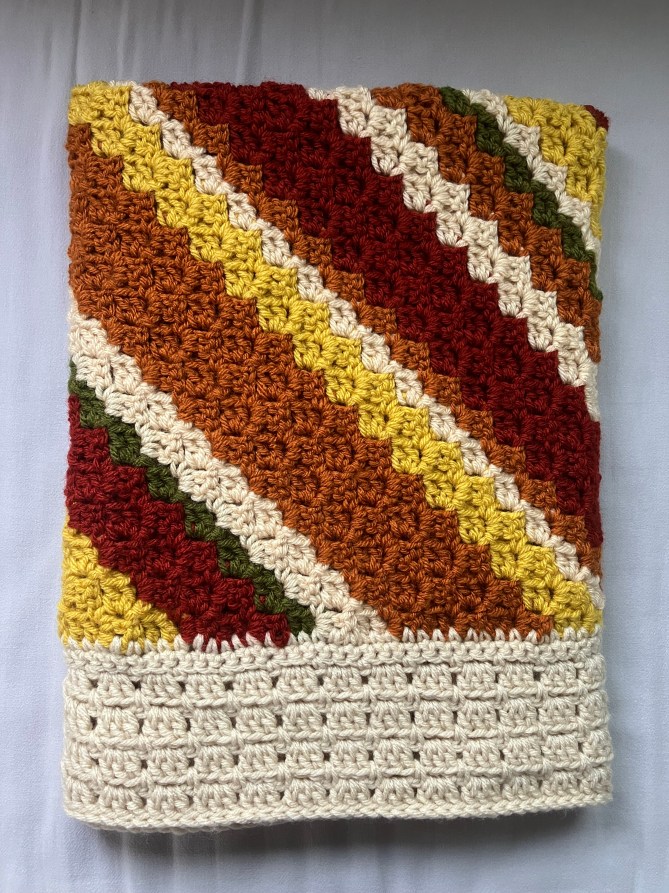
In my last post, I wrote about two baby blankets and two bears I made for the North Georgia Pregnancy Services Center. When I dropped of the two granny blankets and bears, I also included a third blanket and bear. This blanket was made with scrap/stash Lion Brand Vanna’s Choice yarn. For this blanket, I gathered all the Vanna’s Choice I had left in stash and separated it into two groups, muted cool colors and warm autumn like colors. I’ve been playing around with the muted cool colored yarn in a different project and will post about it once it is complete. For the the warm autumn like colors I decided to make a baby blanket.

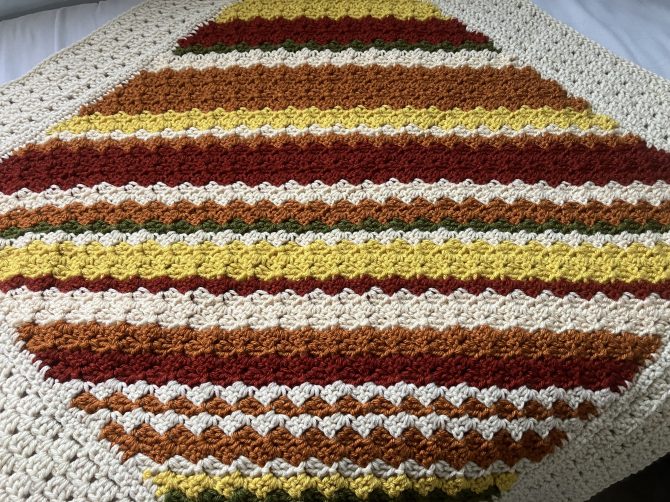
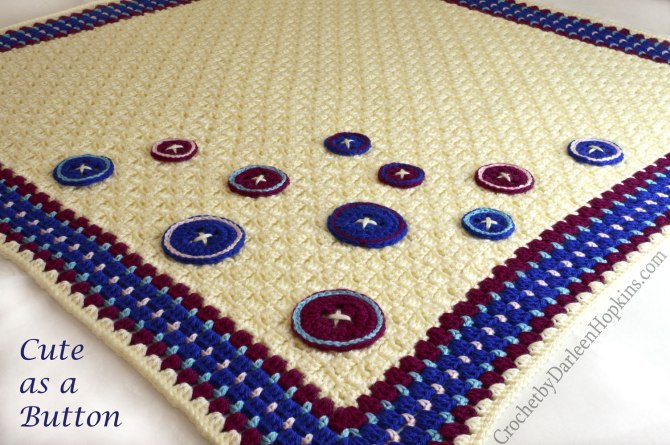
I used the Cute as a Button Baby Blanket as my pattern but had to mix it up some to make the pattern work with the yarn I had. Rather than making the middle a solid color as written in the pattern, I opted for diagonal stripes in order to use all the small amounts of multi-colored skeins. And, since the middle was made with a variety of color, I opted to make the edging solid rather than the multicolored edging as written in the pattern. Finally, I left off the buttons as with the striped center, buttons would have been too busy.

This pattern starts in one corner then increases until half the main section is made, then starts decreasing to finish the second half. My goal was to use as much of my scrap stash as possible without running out of yarn at the end. So I set aside the yarn I planned to use for the edging, weighed what was left, split it into two equal parts and placed into separate bags. The goal was to work the pattern increases until the first bag of yarn was used up then start the decreases with the second bag of yarn. This worked!

Weighing yarn to work a corner to corner crochet pattern

I was so excited to use this awesome yarn for a baby blanket that looked really cool. The edging was stitched with a different, but very similar yarn that was given to me. I’m glad I had it as it gave the blanket the perfect edging. And while I had A LOT of ends to weave in (seriously close to 90) I used up all but a teeny tiny bit of off white. Don’t worry, it will get used in a future project. 🙂

Crochet by Darleen Hopkins corner by corner baby blanket for charity donation

Crochet by Darleen Hopkins corner by corner baby blanket for charity donation uses Cute as a Button Baby Blanket pattern

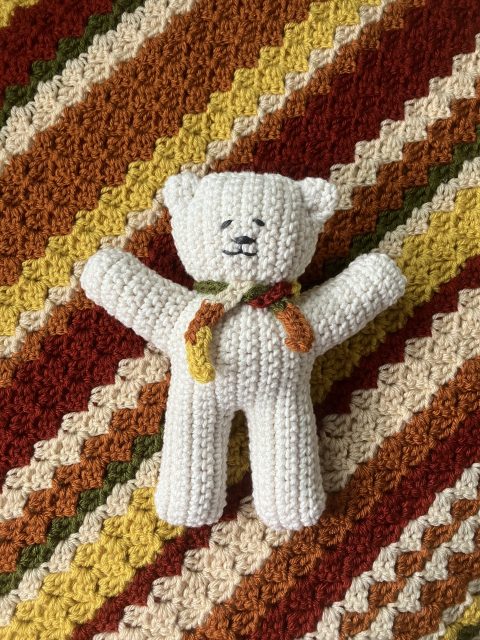
Once the blanket was done, I made another Easy Peasy bear to donate with it. I’m really excited with how well they came out and hope they find a nice home with a new mom and her baby.

Crochet by Darleen Hopkins corner by corner baby blanket and bear for charity donation

Crochet by Darleen Hopkins corner by corner baby blanket for charity donation

With a little bit of imagination and creativity, you can make two items from the same pattern that look completely different! Modified version above and original pattern below.

Happy Crocheting!
Darleen

Cute as a Button Baby Blanket crochet pattern by Darleen Hopkins

The Secret to Great Granny Squares

The Secret to Great Granny Squares
secret-to-great-granny-squares-crochet-by-darleen-hopkins-1
Grannies, aka granny squares, are the epitome of the awesomeness that is crochet.  They can be big and bulky, fun and quirky and even sleek and elegant.  I remember the first time I saw a granny square.  It was one my sister made.  She signed up for a beginning crochet class at the local library the summer she was 10 years old.  Once a week that summer she rode her bike back and forth to the library to learn the craft.  One of the items she made was an afghan for her bed.  The afghan was a giant, purple and white granny square.  I loved it.  And in true big sister fashion, she shared with me the skills she had learned.  We had some challenges, one was our age and two, she’s a lefty and I am a righty.  While I managed to learn the basics I never really did much with crochet back then.  Over the next couple of years my sister’s interest in crochet faded.  Fast forward 40+ years and I’m crocheting constantly now.  And I have never forgotten that amazing gigantic purple granny square.

So what is the secret to great grannies?

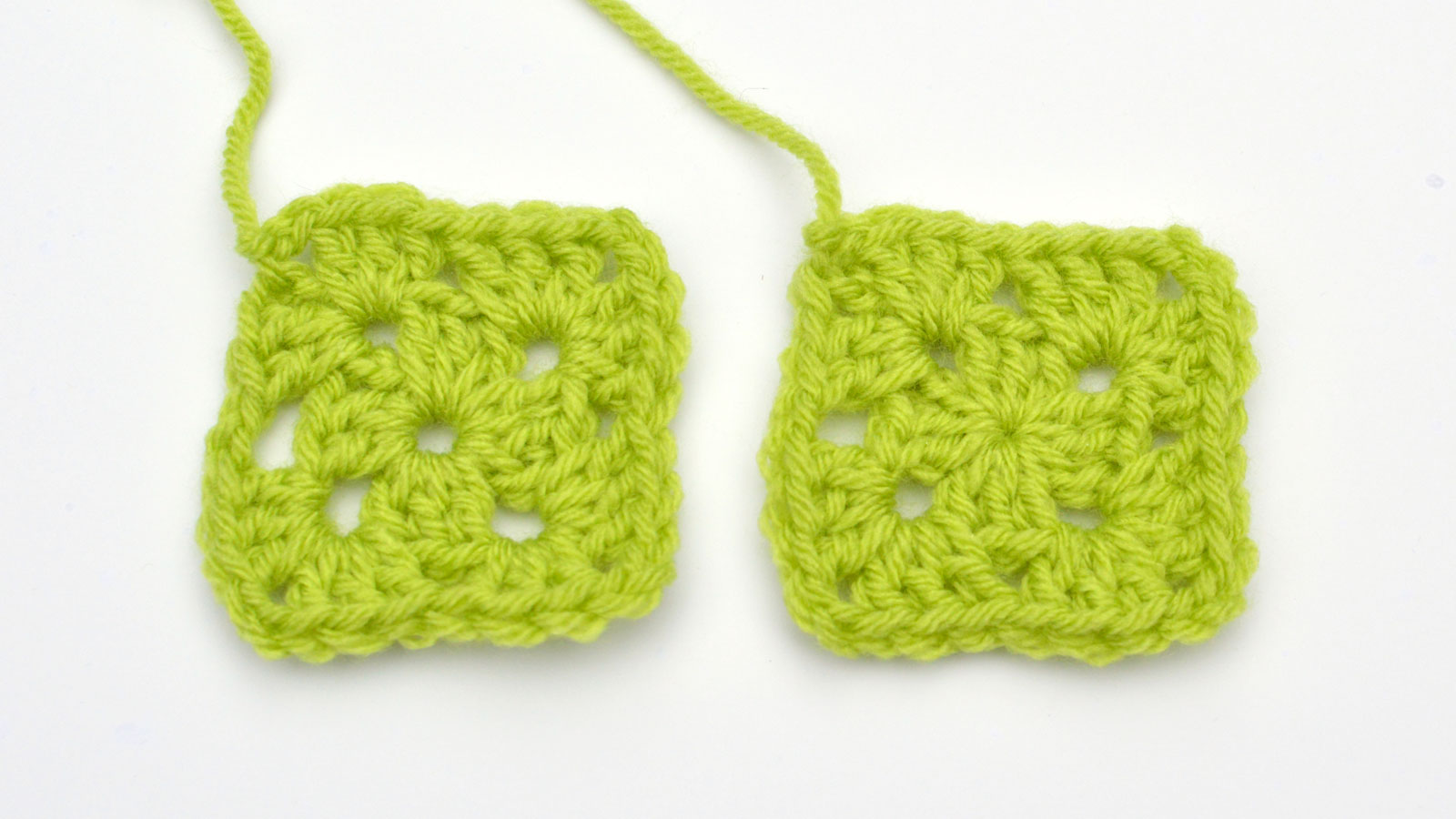
1.       The beginning.  My preferred method is to use a magic circle/adjustable loop to start a granny.  This method allows you to pull the center tight.  Unless, of course, you want a space in the middle then, by all means, start your granny with a joined loop of starting chains.  It is your granny so start it the way you like for the look you want!

The granny on the right was started with the magic circle/adjustable loop method.  The granny on the left was started with chaining four and then joined to form a ring.  Neither have been blocked.secret-to-great-granny-squares-crochet-by-darleen-hopkins-2
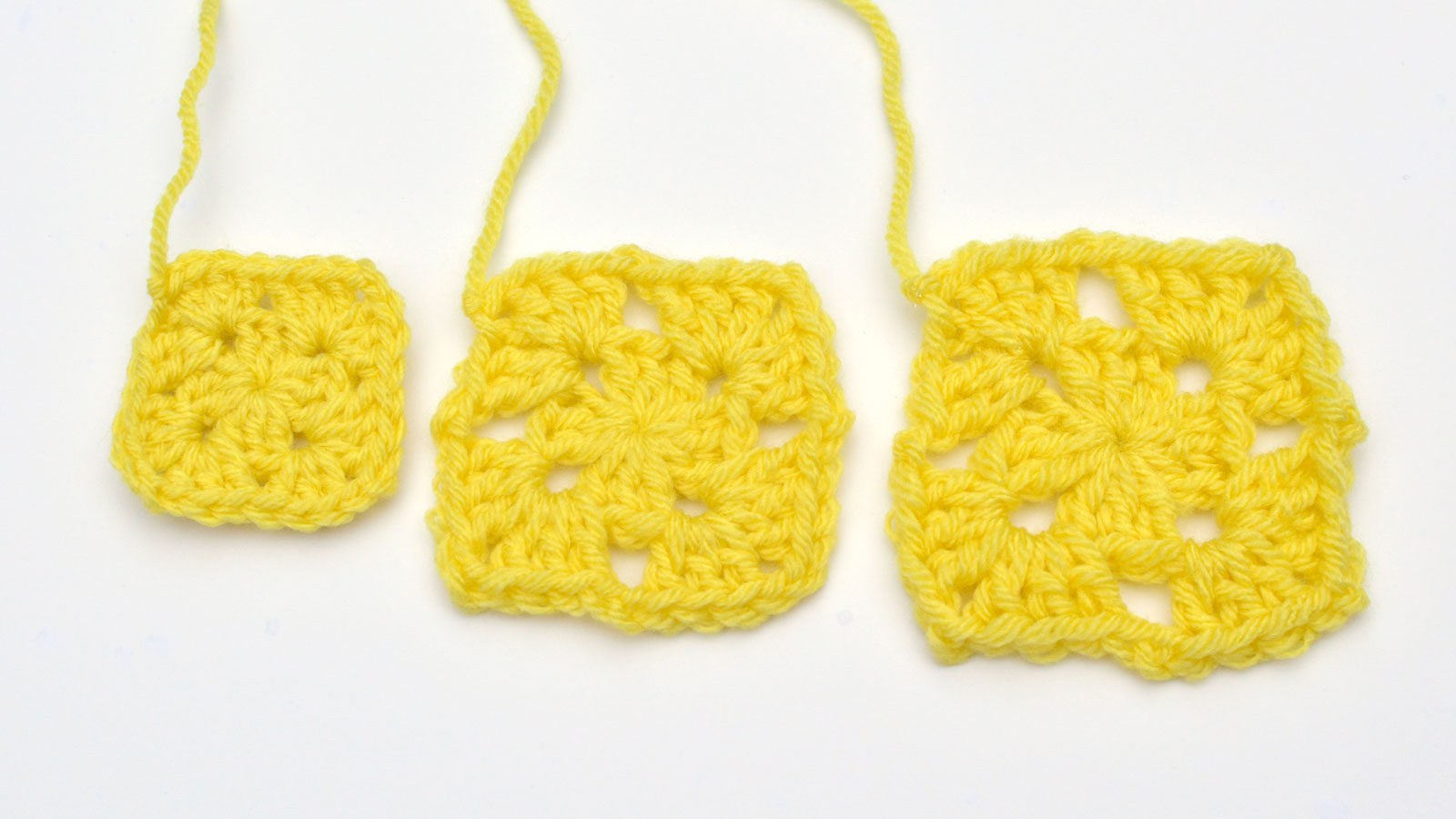
2.       Yarn and hook selection.  While granny squares are versatile and look great in any yarn or thread, it is important to always work with a hook that is appropriate for your yarn.  If your hook is too small for the yarn, your granny might cup, curl or lose the defining spaces.  If it is too big, your granny may be floppy, sloppy, or be too holey.  You also want to use a yarn that is appropriate for the project.  If you are making a scarf or a baby blanket, use yarn dk to aran weight.  If you are using your grannies in a dressy headband, you may want to use thinner, delicate yarns like fingering or lace weight.

The granny in the middle was crocheted with the yarn label’s recommended hook size.  The granny on the left was crocheted with a smaller hook while the on the granny on the right was crocheted with a larger hook.  Neither have been blocked.
secret-to-great-granny-squares-crochet-by-darleen-hopkins-4

3.       Color selection.  Ahhh, this is where the granny square shines.  There are infinite possibilities for the colors of your granny.  Use up scraps and make each round a different color.

*TIP! Vary the corner where you add and end your new yarn.  This will prevent all the ends from being woven in at the same location.

So how do you know which colors work well together?  Some people are gifted with an innate ability to blend colors.  Other people need assistance.  If you feel you are one of those who needs help grouping colors together, try what I do…learn by what others have done! No need to reinvent the (color) wheel.  Take a look at other crocheted projects and see what color combinations appeal to you.  Find something you like and make note of it. Find something you don’t like and make note of that too so you don’t make the same mistake.
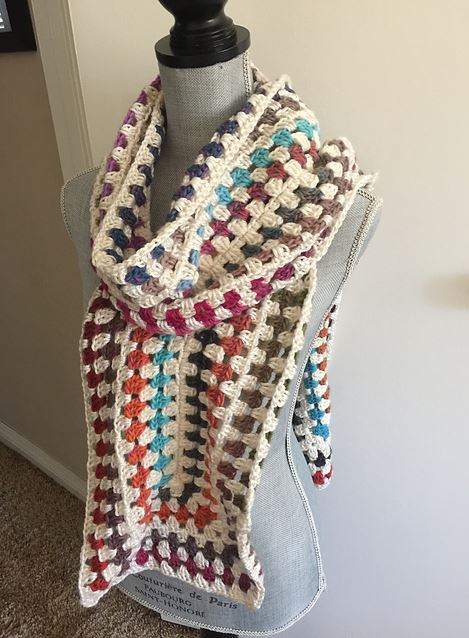
Dora's UnSquared Granny Scarf, crochet

Dora’s UnSquared Granny Scarf.  She used up three different color changing balls of yarn (Boreal in Fireweed, Beaver and Taiga).  Every other round is solid off-white to tie it all together.  Perfect!  Ravelry members can view her project here.

Another option to use are free online sources.  Do an internet search for “color wheel” and you will find a number of sites dedicated to helping you select colors that look great together.  A couple combinations are contrasting colors; opposites sides of the color wheel, monochromatic colors; different values of the same color, and analogous; colors that are adjacent on the color wheel.  The better you understand the color wheel, the easier it will be for you to visualize colors for your projects.  Once you select the colors you like, do an internet search for “random stripe generator”.  There are a number of these available online for free.  Some are simple and some are complex.  Play with them and get some ideas of how you want to space out your selected colors.

Last, in regards to color, remember to have fun with it.  If you are making a project with a number of grannies, make each granny slightly different.  For example, maybe you picked out four analogous colors for a granny square blanket.  One option is to make a number of small grannies, randomly using only three of the selected four colors for each square and then stitch them all together.  If you are staying within the same color scheme, the squares do not have to be identical to work well together.

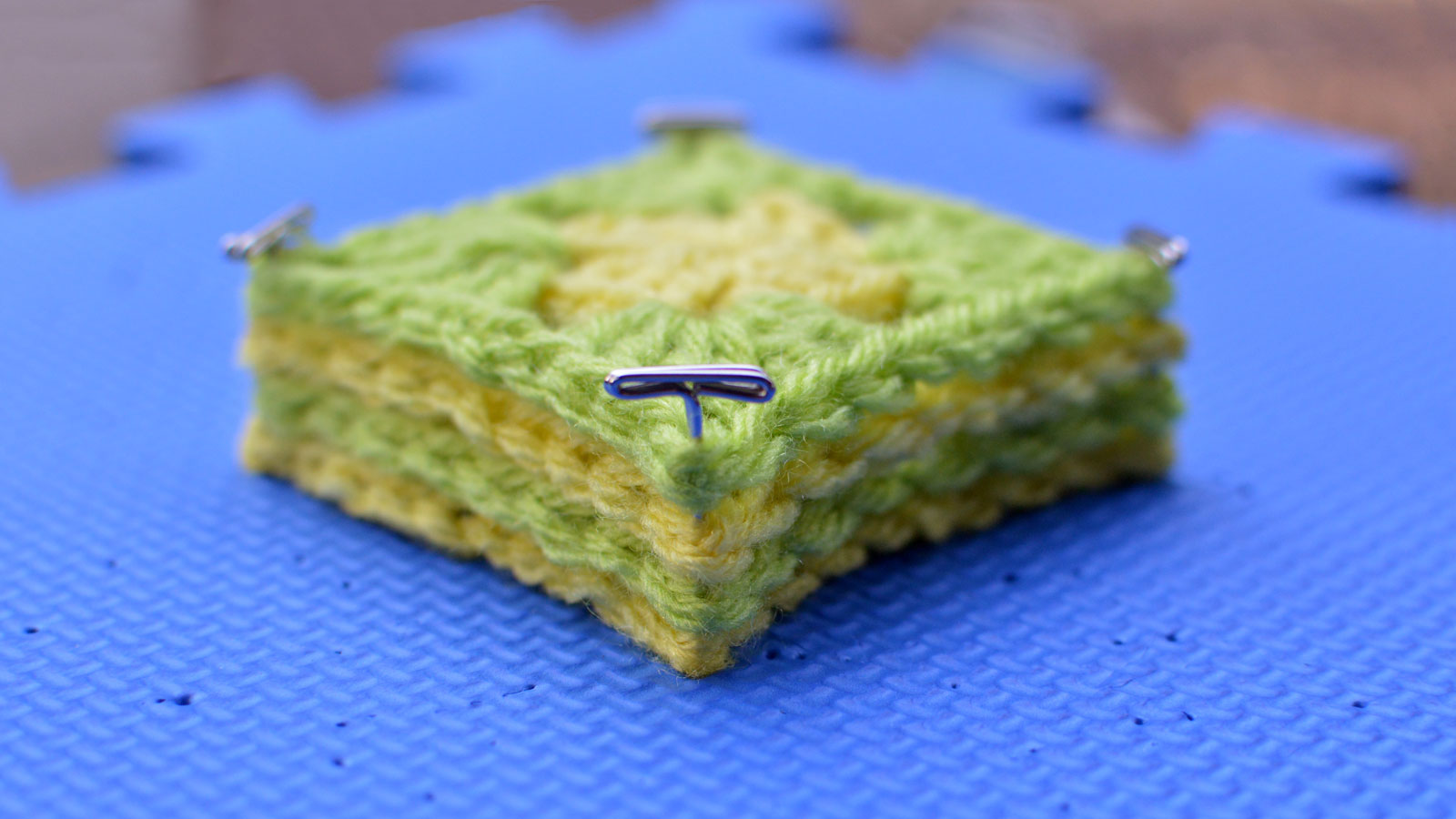
4.       Blocking.  Yes, this is an important step and should not be overlooked.  You should block your grannies.  This will give them shape.  And if you are joining grannies together, you want them to be consistent in size.  This will make it a lot easier to join.  A simple way to block your grannies is to block them all together, one on top of the other.  And remember, always block your squares with a method that is appropriate for your yarn.

*TIP! Measure the distance between your blocking pins for a perfect square.
secret-to-great-granny-squares-crochet-by-darleen-hopkins-3

Get creative.  You can make so many different things with the simple granny square.  Whether you choose to make one gigantic granny square or join many grannies together, the possibilities are endless. Make a pillow, an afghan, a scarf, a blanket edging, a headband, a bag, a belt or a baby blanket. Who knew you could make so many beautiful items out of something so simple?

Happy Crocheting!
Darleen

PS: Once you’ve mastered the Granny Square, have some fun and try patterns that use the iconic granny formula but mix it up a little.
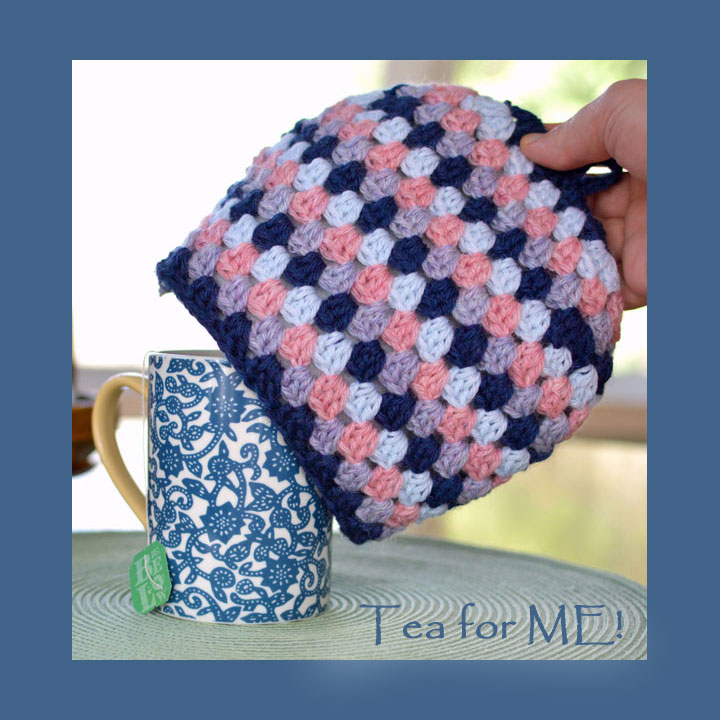
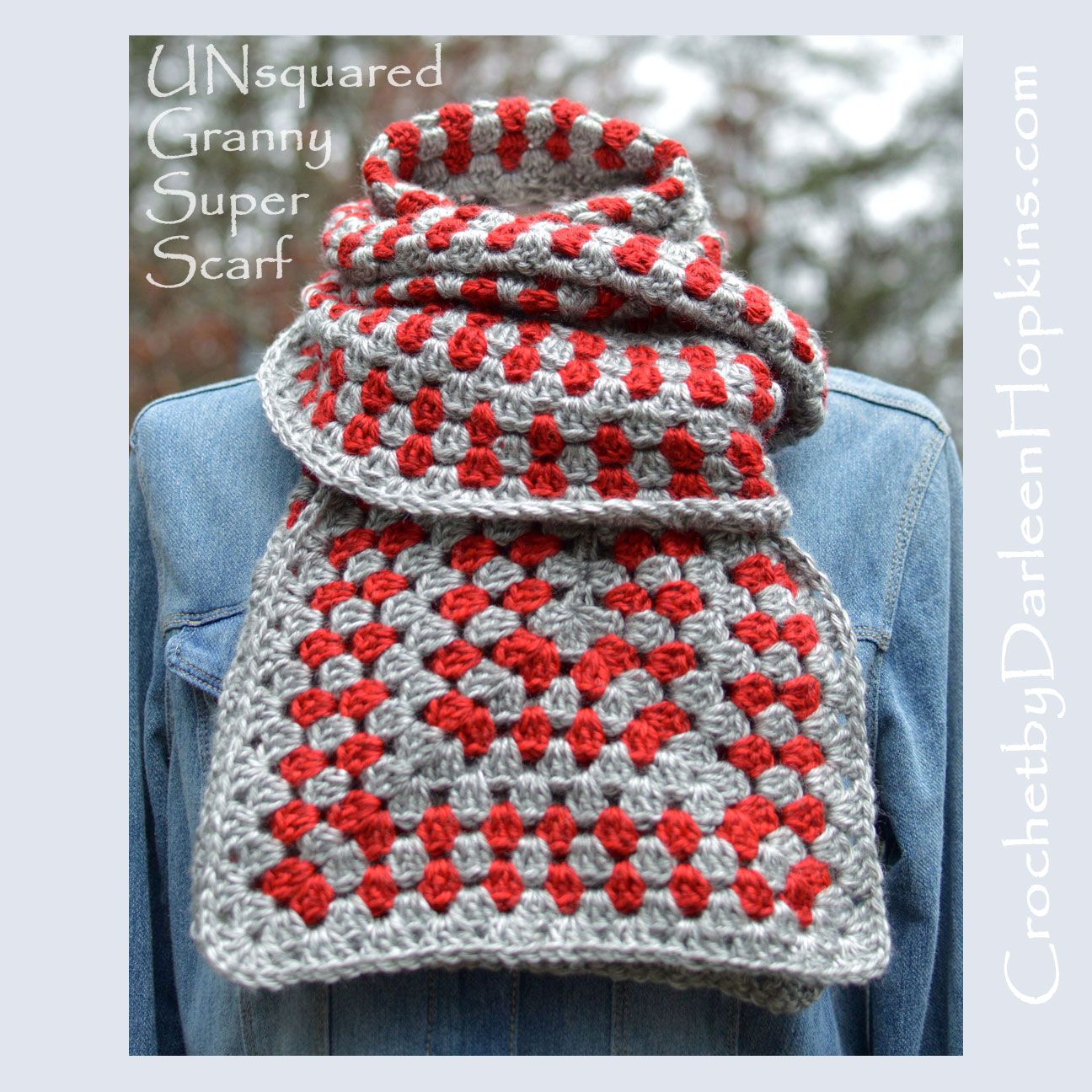
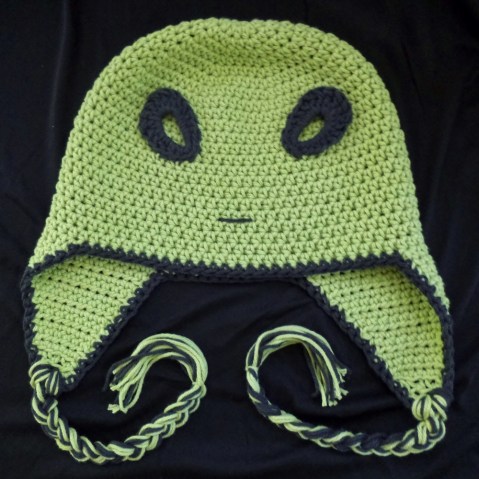
Tea-for-Me-Mug-Cozy-crochet-pattern-by-Darleen-Hopkins-squareCrochet-pattern-UNsquared-Granny-Super-ScarfAlien baby lovey crochet pattern


Eco-Craft, Yarn Balls aka. Dryer Balls

How to make dryer balls for zero dollars!

I’ve been intrigued by dryer balls for awhile now.  Every once in awhile I’ll see a post about them and think to myself-I wonder if they work? I have no interest in purchasing plastic or rubber ones or using tennis balls in my dryer.  I can’t help but wonder if those types of dryer balls release toxins of some sort when exposed to heat.  My interest is to improve my laundry, naturally.  I would like to use less dryer sheets, not replace sheets with potentially more or different chemicals.  So I finally decided to give dryer balls a try when I came across some wool yarn and felted wool scraps in my stash.  I’m on a quest to reduce my stash. I thought this would be a good way to use up some of it and finally find out if 100% wool dryer balls actually work.  The yarn and felted sweater scraps are leftover from previous projects.  Therefore, my cost is $0.

Step 1: Gather up 100% wool scraps and 100% wool yarn.

yarnballs1

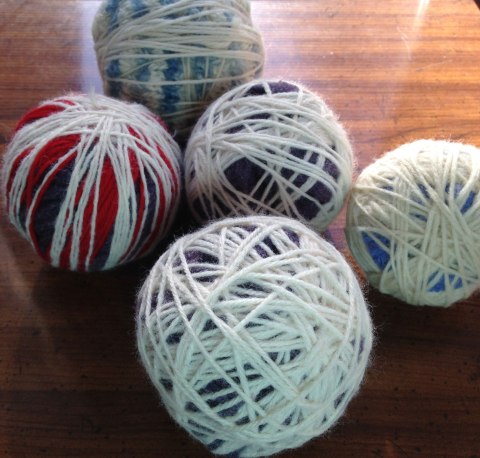
Felted wool scraps from various projects, felted wool “yarn” cut from a damaged wool sweater, and some random 100% yarn wool.

Step 2: Smush the scraps into a ball and then wrap with yarn.  Add more scraps and wrap with more yarn.  Repeat until the ball is the size you want.

yarnballs2

Step 3: Secure yarn.

yarnballs3

Step 4: Repeat until you have as many as you want or you run out of scraps.  I didn’t time myself but I think it took me about an hour to make all of these.

yarnballs4

Step 5: Felt them.  I placed them in a lingerie bag and washed them with my regular laundry for a couple of  loads.  Once they were felted enough where I didn’t think they would unravel, I took them out of the lingerie bag and washed them with the regular laundry for a couple more loads.  Last, I trimmed the few ends that came undone.

So DO THEY WORK?

I’ve heard claims that they save energy, reduce static, reduce dryer time, reduce wrinkles and make clothes softer.   If they did all of these, I would be ecstatic.  If they did one or two, I’d be happy.  I’ve been using them for over a month now and I’m pretty happy.  My clothes seem to be dry when the cycle is complete.  Before dryer balls, I often had to add time to the dryer because the clothes were still damp.  More time in the dryer will result in more static.  And, while I still have to use dryer sheets, I’m using one per load rather than two.  Yup, I’ve had to use two for awhile now.  My boys wear a lot of athletic, moisture wicking type clothing made out of synthetic materials.  These items tend to pick up static when in the dryer.  However, less time in the dryer = less static.  So, overall, I’m happy with the results.

I have a few more scraps so I may make one or two more.   If you have the materials, give it a try and let me know what you think.

PatchworkKitty-001


Blocking Acrylic Yarn-Yes You Can!

Patchwork Kitty BlanketOne of my favorite 100% acrylic yarns to use is Lion Brand’s Vanna’s Choice, a great aran/heavy worsted weight yarn.  With its bright colors and easy care wash-ability, it is often my yarn of choice for baby blankets, throws and hat and scarf sets.  Even my kitty loves Vanna’s Choice!  Not everything you make with this yarn will need blocking.  However, when you do make an acrylic item that would benefit from blocking, don’t fear.

Blocking acrylic can be done and is easy.   To block acrylic, you must subject the fiber to heat in the form of steam.  Some call it KILLING ACRYLIC, and in many ways, this is accurate in that you do permanently alter the fabric.  The heat “melts” the fibers together to create the blocked shape.  If this is done properly and accurately, you will not notice anything more than a beautifully finished item.   So how do you do this?

First, what do you need?What you need to block acrylic yarn

  • Steam  I choose to use a garment steamer.  Some use an iron with a steam setting.  If you use an iron, it is important that the iron NEVER touches the fabric.  If it does, it will burn and you will end up with a shiny, flattened item with loss of stitch definition.  There are times when this may be the desired effect, but usually it isn’t.
  • Blocking boards
  • Blocking pins-no rust
  • Your item.  I’m using the scarf from the pattern Glacier.  The stitch pattern creates a knit look ribbing on one side and a beautiful texture on the other.  It also causes the scarf to curl.  Blocking is necessary to remove the curl.

how to block acrylic yarn step 1Step One

Pin the item to the blocking boards.  This is the time to stretch it to shape, open up lace and even out the edges.  For this scarf, I just want to remove the curl.  I’m not interested in stretching or opening up the stitches.  I like the ribbing and want to keep it as is.

how to block acrylic yarn step 2Step Two

Attack with steam.  Keep the iron or the garment steamer head about 1/4 to 1/2 inch away from the fabric.  Work the steam over the entire item and use your fingers to make adjustments if necessary (do not place your fingers in direct steam, it will burn you).  I found it is NOT necessary to soak the garment.  Just damp is fine.  For this scarf, I steamed the entire scarf but spent additional time on the edges as that is my area of concern.

how to block acrylic yarn step 3Step Three

Allow to dry, mostly, then repeat on the other side.  I had a couple of sections that did get soaked.  I didn’t worry about them drying.  When the damp parts were mostly dry, about 20 minutes or so, I flipped it over and repeated.  As you can see by the photos, the scarf is laying pretty flat and there was no need to pin.  Giving it a second attack of steam on the other side will finalize the blocking.  Now allow it to fully dry and you are done!

Your finished product will now look like a polished and beautiful handmade work of art!

Glacier scaf before blocking acrylic

Glacier scarf before blocking

Glacier scarf after blocking

Remember, blocking or killing acrylic is permanent.  There will be items you don’t want to block as you wont want them to lose their stretch-ability. You won’t want to do this on something that is crocheted with negative ease.  The sample scarf has a ribbing stitch pattern.  It is purely decorative and not necessary for stretching.  The coordinating hat also uses a similar ribbing stitch pattern however it is necessary for the hat to have give and stretch for proper fit.  I would not want to block the hat as I would not want to remove this necessary design feature of the hat.

Blocking shouldn’t be something to fear but you do need to be aware that it does permanently change the crocheted item.  Therefore, go slow.  You can always block some more but if you do too much, you could end up with something you hadn’t planned for.

Glacier

Working in the back horizontal bar, crochet

You want me to put my hook where????

Have you ever had a pattern tell you to hdc-whb or whb-hdc? Huh?  Half double crochet worked in the horizontal bar (also called ‘back bar’) is a pretty easy stitch and creates beautiful ribbing.  After watching the video, take some time to work a few rows of hdc-whb and you’ll feel like an expert crocheter!

Starting Crochet-Working in the Back Bump, video how-to

Working in the Back Bump of your Starting Chain

I’m a fan of working in the back bump of a starting chain.  It creates a finished edge on the starting chain which matches the top edge of the row.  It looks nicer and I think creates a more flexible starting chain with fewer gaps.

As always, the easiest way to learn something is to have someone show you-thank you internet for giving us this ability!  (In addition to being a crochet addict, I’m a bit of a geek, if you haven’t already figured that out…)  So I have spent my day off today (yeah! a day off) trying to figure out how to film a video and upload to my website.  Hopefully, this will work and I’ll be able to show you this awesome method.

Here it goes!

Buy 2 Get 1 Free on Ravelry, Crochet by Darleen Hopkins

Eyes, Getting them Right, Part III, Crocheted Eyes

Part III in Eyes, Getting them Right

Capturing the right eye look for your crocheted creation may be as easy as  baby safe yarn stitched eyes or cute button eyes.  Or it may require something a little bit more than either of these.  For those times when you need just a little bit more, crocheted eyes are the solution.  And, just like anything you make with yarn, your possibilities are endless.

P1010961 (750x563)

P1010779 (1000x997)Mix it Up! Patterns will include instructions on how to make crocheted eyes.  But once you have made a couple, mix and match different eyes with different patterns for an endless variety of options.  My Kissy! Kissy! Fish Face pattern comes with instructions for 2 different eye options.  Same basic pattern but look at how different the two fish are with a small change in the eyes.

P1020025 (809x1000)Add Twinkle!  Probably my favorite part about crocheted eyes is the option to add a little twinkle to the eye.  With the tiniest amount of white yarn, your eyes go from bland to laughing eyes.  And you can use this twinkle to have the eyes looking in one direction.  I use the beginning tail (white) and make two tiny stitches at about a 120 degree angle.  The result is adorable.  He can look up, down, to the side or cross-eyed with this technique.  You do have to be careful.  If the twinkle in both eyes isn’t lined up just right, your critter will look “off”.
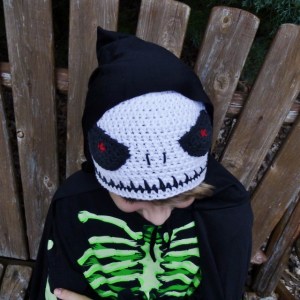
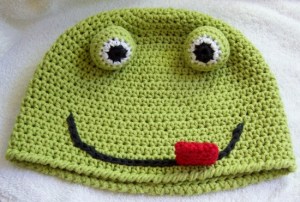
P1010130 (1000x1000)P1010663 (500x500)Crocheted Skull Hat100_6647 (550x371)Explore your Options! With crocheted eyes, you are only limited by your imagination.  Keep a folder-physical or virtual-of all your different eye patterns.  After you have a collection, start exploring.  Mix and match or come up with something totally new and unique.

Pros: Endless possibilities!

Cons: Takes a little longer to do and you may need to follow a pattern to get the right look.

IN SUMMARY

Whichever eye option you chose, make sure you do the following:

  • Keep the eyes even.  You want your hat/doll/whatever you are making to be silly, not odd-looking.  I always add 1 eye, then follow the same round/row to the spot where the next eye should be.  Also, I don’t work in the ends until I am certain the placement is correct.
  • For hats, eyes placed closer together is better than farther apart.  Hats will stretch when worn thereby adjusting the placement of the eyes.  Try the hat on before committing to the final placement (ie working in all ends).
  • Have fun with it!

Eyes, Getting Them Right, Part I-Yarn Stitched

 “The Eyes are the Mirror of the Soul”

Getting the eyes right on your goofy hat, bib or doll can make or break the cuteness factor of your creation.  Choosing the right eye may depend on the recipient of the item, it’s intended use or what items you have on hand.  I have three favorite easy and inexpensive methods for creating eyes; yarn stitched eyes, button eyes and crocheted eyes.  This series of blog posts will discuss the pros and cons of each method, as well as some overall tips to use and pitfalls to avoid when attaching the eyes.

100_6154Yarn Stitched

Just a little bit of yarn can convey an expression-happy, angry or laughing.  Make your doll asleep or stitch an “X” and turn her into a zombie.  Yarn stitching is a simple form of embroidery.  My Happy Pets hat uses a real simple eye to create happy, smiling eyes.  It’s basically a stretched out tip of an arrow.

Sleeping eyes are a snap with a little contrasting yarn.

Sometimes, with a doll, all you need is a  tiny eye and a French knot would be perfect in this case.  I have a future pattern in mind where I will use this simple knot for the eye.  In the meantime, I found this great resource if you want to give it a try.

Attack eyebrows

Attack eyebrows

You can combine yarn stitching with other forms of eyes to add emotion.  My Attack Sock Monkey combines a button eye with a simple yarn stitched eyebrow slanted downward to show he’s in attack mode.

The hardest part about this method is working in ends so they aren’t noticeable on the outside or bumpy on the inside.  It is a very safe baby option  as there is no choking hazard at all. Do an internet search for “embroidered eyes” and click the “images” button for ideas.  You’ll find some beautiful, amazing, complex options but also some real simple variations that will be easy for you to duplicate with your own projects.

Pros

  • Uses left over yarn.
  • Baby-safe, no choking hazard.
  • Great option for items that will be washed a lot.

Cons

  • Can be tricky to learn the more complicated stitches.
  • Ends need to be worked in securely, invisibly and without bumps on the inside of the hat.

Muno by Michelle Vass

Muno by Michelle Vass

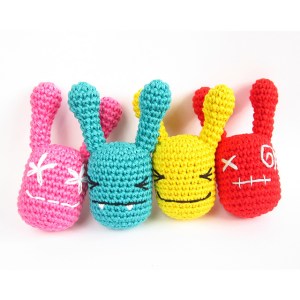
Here are a couple examples of other designer’s patterns (Rattle Monsters by Kristi Tullus and Muno by Michelle Vess) that use simple yarn stitched eyes.  I love the creativity!  Click on the photos to learn more about the pattern.

Rattle Monsters by Kristi Tullus

Rattle Monsters
by
Kristi Tullus

Next, Button Eyes

Eyes, Getting them Right, Part II-Buttons

Part II in Eyes, Getting them Right

My last post described yarn stitched or embroidered eyes.    Another super easy method to adding character to your creations is with button eyes.

Buttons

Buttons are easy, inexpensive options for eyes and one of my favorites. You can find projects that use a simple basic black button sewed with black thread to projects that use three different colored buttons stacked one on top of the other and backed with felt.  You know the saying, “Cute as a button”, well, there’s are reason for it!  Buttons are cute and crocheted critters with button eyes are even cuter.

I prefer buttons that have four holes for attaching rather than two.  They are more secure and I find the four holed buttons look better.  Maybe it gives a slight illusion of a pupil, not sure, but it is a preference of mine.

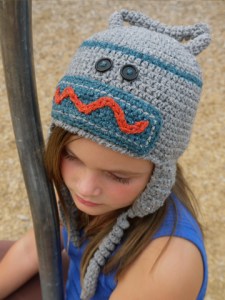
Mr. Springy, The Robot DudeTIPS

Use yarn to sew on the buttons.  If your yarn is worsted weight or thicker it will be too thick to use to attach the button.   A simple option is to split the plies of the yarn and use just one.  Try sewing on the button with a coordinating color.   For example, Mr. Springy has button eyes that are sewed on with the contrasting yarn used for his stripes.

Watch out for the types of buttons that attach at the back only.  If they both aren’t secured tight enough they will hang uneven and ruin the look of a project.  You may want to avoid using this type of button on a hat unless you used very thick yarn to crochet the hat.  It is possible for the back of the button to poke thru and irritate the scalp.

Be careful of your placement of the buttons on a hat.  If the hat is a gift or for donation, try the hat on after you placed the eyes to make sure they lay properly and are positioned in a natural way-not too far out to the sides.  Hats stretch when worn and sometimes what looks good laying flat doesn’t look so great when worn.

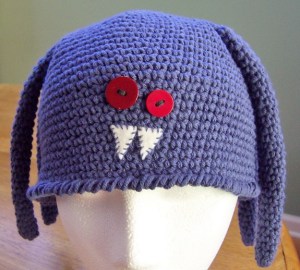
100_6208_medium2Have fun with buttons.  I made a Goofy Spider hat-he was purple and I wanted to give him red eyes.  I had two mismatched red buttons in my button bin.  I think they made him perfectly goofy looking.

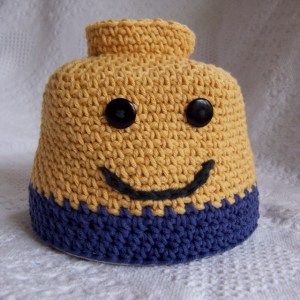
100_6617 (640x640)Get creative with your button options.  I had a hard time finding the perfect buttons for Blockhead Man.  I want flat shiny black buttons and all I had were ones with ridges.  So I flipped the buttons over, used the wrong side and they worked out perfect!

Pros

  • Cute, cute and more cute.  I love the homey feel button eyes give a project.

Cons

  • #1 Con, buttons are a choking hazard.  Do not use on items that will be given to babies younger than 3 yrs. old.

Next, Crocheted Eyes…